SEO for a Forex Broker
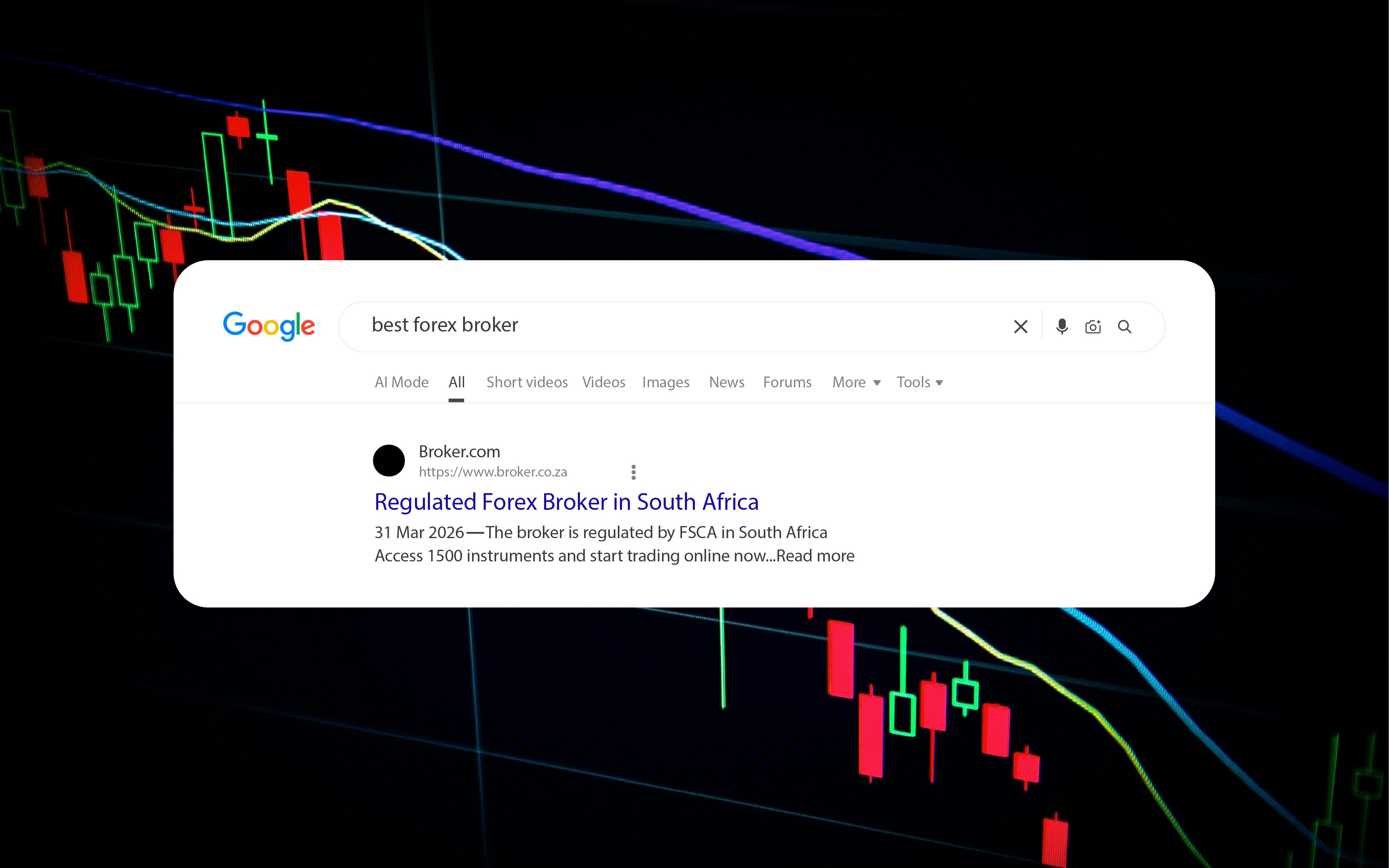
Over the past few years, working with Forex brokers expanding across multiple jurisdictions, I have seen how complicated scaling acquisition across markets has become. Between regulatory constraints, rising paid media costs, and increasing competition in organic search, what used to feel straightforward no longer is.
What many still treat as separate decisions, domain structure, content strategy, link building, in reality operate as one system.
At some point, every broker faces the same question. Should we fragment our presence across multiple TLDs or consolidate everything under a single domain using hreflang. But the decision does not stop there. It directly affects how content is produced, how backlinks are acquired, and how performance is measured.
One of the most common mistakes I see is treating these elements in isolation.
In practice, domain structure, content, and authority building are tightly connected. They shape how traffic is acquired, how attribution works, and how efficiently a broker can scale across markets. When this is not aligned properly, the inefficiencies do not just show up in rankings. They carry through into PPC, affiliates, SEO, and overall brand growth.
What many still treat as separate decisions, domain structure, content strategy, link building, in reality operate as one system.
At some point, every broker faces the same question. Should we fragment our presence across multiple TLDs or consolidate everything under a single domain using hreflang. But the decision does not stop there. It directly affects how content is produced, how backlinks are acquired, and how performance is measured.
One of the most common mistakes I see is treating these elements in isolation.
In practice, domain structure, content, and authority building are tightly connected. They shape how traffic is acquired, how attribution works, and how efficiently a broker can scale across markets. When this is not aligned properly, the inefficiencies do not just show up in rankings. They carry through into PPC, affiliates, SEO, and overall brand growth.
Why SEO for Forex Matters More Than Ever.
Over the past few years, I have seen a clear shift in how Forex brokers approach acquisition. With platforms like Google tightening advertising policies and Meta campaigns becoming increasingly restricted, the ability to scale through traditional paid channels is no longer guaranteed.
In many cases, brokers are left with a limited set of options. Affiliates, direct media buying, and search engine optimization become the primary channels available to drive growth.
However, each of these comes with its own limitations.
When it comes to direct media buying, placements are often made across websites that are overloaded with banners, pop-ups, and competing messages. The user experience is fragmented, and attention is limited. Even when traffic is generated, the quality and intent are inconsistent.
This is where SEO becomes significantly more valuable.
Unlike other channels, search traffic is intent-driven. The user is actively looking for a solution, comparing brokers, or evaluating trading conditions. This creates a fundamentally different starting point in the acquisition journey—one that is not interrupted, but initiated by the user.
In many cases, brokers are left with a limited set of options. Affiliates, direct media buying, and search engine optimization become the primary channels available to drive growth.
However, each of these comes with its own limitations.
When it comes to direct media buying, placements are often made across websites that are overloaded with banners, pop-ups, and competing messages. The user experience is fragmented, and attention is limited. Even when traffic is generated, the quality and intent are inconsistent.
This is where SEO becomes significantly more valuable.
Unlike other channels, search traffic is intent-driven. The user is actively looking for a solution, comparing brokers, or evaluating trading conditions. This creates a fundamentally different starting point in the acquisition journey—one that is not interrupted, but initiated by the user.
.png)
Multi-domain Approach - Ideal but with challenges
Deploying a dedicated domain per country (e.g., broker.co.ke for Kenya) provides strong geo-targeting signals to search engines. ccTLDs are inherently associated with specific markets, which can improve local ranking performance without relying heavily on additional signals such as hreflang annotations. Beyond technical SEO, ccTLDs often enhance user trust and perceived legitimacy.
In regulated industries such as Forex, localised domains can reinforce the impression of compliance with regional licensing frameworks, which may positively influence conversion rates.
While a country-specific domain such as .co.za may signal localisation, it does not always translate into higher credibility. In many cases, traders associate global brokers operating on .com domains with greater scale, stability, and international recognition.
Unless the broker has already established strong brand awareness, relying on a local domain alone can have the opposite effect. Without consistent investment in brand building through channels such as PPC, direct media buying, or sponsorships, a country-level domain may appear less authoritative compared to well-known global competitors.
From an off-page perspective, ccTLDs also enable the development of country-specific backlink profiles, aligning link acquisition strategies with local publishers, media outlets, and affiliate networks. This of course can also be chieved with the correct implementation of the hreflang tag.
This approach strengthens both topical and geographic relevance within each target market. However, these advantages come at the cost of fragmentation—both in authority and operational complexity. A multi-domain setup places greater pressure on the backend infrastructure, which must be capable of supporting multiple country instances efficiently. Without the right system in place, even simple updates can become slow and difficult to manage across domains.
This also creates a stronger need for centralised control. Brokers operating several domains typically require a dashboard or internal workflow that allows teams to make fast, consistent changes across markets without introducing discrepancies in content, compliance messaging, or product information. Organisational complexity is another factor. A broker must decide whether each domain will be handled by a separate regional team or managed centrally. In either case, the model introduces additional coordination overhead, particularly when multiple markets need parallel updates.
The cost of off-page SEO is also significantly higher in a multi-domain environment and perhaps this is the most important reason why a forex broker shouldn't go for a multidomain but for a single domain. Because each domain builds authority separately, backlink acquisition efforts must often be repeated market by market. In contrast, a consolidated hreflang structure allows backlinks acquired for one region to contribute to the overall strength of the primary domain.
In regulated industries such as Forex, localised domains can reinforce the impression of compliance with regional licensing frameworks, which may positively influence conversion rates.
While a country-specific domain such as .co.za may signal localisation, it does not always translate into higher credibility. In many cases, traders associate global brokers operating on .com domains with greater scale, stability, and international recognition.
Unless the broker has already established strong brand awareness, relying on a local domain alone can have the opposite effect. Without consistent investment in brand building through channels such as PPC, direct media buying, or sponsorships, a country-level domain may appear less authoritative compared to well-known global competitors.
From an off-page perspective, ccTLDs also enable the development of country-specific backlink profiles, aligning link acquisition strategies with local publishers, media outlets, and affiliate networks. This of course can also be chieved with the correct implementation of the hreflang tag.
This approach strengthens both topical and geographic relevance within each target market. However, these advantages come at the cost of fragmentation—both in authority and operational complexity. A multi-domain setup places greater pressure on the backend infrastructure, which must be capable of supporting multiple country instances efficiently. Without the right system in place, even simple updates can become slow and difficult to manage across domains.
This also creates a stronger need for centralised control. Brokers operating several domains typically require a dashboard or internal workflow that allows teams to make fast, consistent changes across markets without introducing discrepancies in content, compliance messaging, or product information. Organisational complexity is another factor. A broker must decide whether each domain will be handled by a separate regional team or managed centrally. In either case, the model introduces additional coordination overhead, particularly when multiple markets need parallel updates.
The cost of off-page SEO is also significantly higher in a multi-domain environment and perhaps this is the most important reason why a forex broker shouldn't go for a multidomain but for a single domain. Because each domain builds authority separately, backlink acquisition efforts must often be repeated market by market. In contrast, a consolidated hreflang structure allows backlinks acquired for one region to contribute to the overall strength of the primary domain.
Single Domain for Forex Brokers
A single-domain structure using hreflang takes a fundamentally different approach. Instead of distributing authority across multiple domains, all markets are consolidated under one primary domain, typically structured through subdirectories or parameters, with correct hreflang tags guiding search engines on language and regional targeting.
This approach offers several advantages
From an SEO perspective, the most significant advantage is authority consolidation which by itself translates into significantly lower costs.
All backlinks, regardless of the market they originate from, contribute to the strength of a single domain. This allows brokers to build momentum faster in competitive search environments, as link equity is not diluted across multiple assets. This model also simplifies scaling. Entering a new market does not require launching a new domain and rebuilding authority from scratch. Instead, new regions can be added within the existing structure, allowing faster deployment and quicker visibility in search results. Operationally, a single-domain setup reduces fragmentation. Content, tracking, and analytics are centralised, making it easier to maintain consistency across markets. Updates to compliance messaging, platform features, or product offerings can be rolled out more efficiently without the need to replicate changes across multiple domains.
From an acquisition standpoint, this structure also improves visibility across channels. PPC campaigns, affiliate tracking, and attribution models can be managed within a unified environment, reducing complexity in cross-domain tracking and improving data accuracy.
However, this approach introduces its own challenges. Unlike ccTLDs, a single domain does not inherently signal geographic relevance, which means search engines rely more heavily on correct hreflang implementation, content signals, and external factors to correctly interpret targeting. Any misconfiguration in hreflang can lead to indexing issues, incorrect page serving, or internal competition between regional versions.
This approach offers several advantages
From an SEO perspective, the most significant advantage is authority consolidation which by itself translates into significantly lower costs.
All backlinks, regardless of the market they originate from, contribute to the strength of a single domain. This allows brokers to build momentum faster in competitive search environments, as link equity is not diluted across multiple assets. This model also simplifies scaling. Entering a new market does not require launching a new domain and rebuilding authority from scratch. Instead, new regions can be added within the existing structure, allowing faster deployment and quicker visibility in search results. Operationally, a single-domain setup reduces fragmentation. Content, tracking, and analytics are centralised, making it easier to maintain consistency across markets. Updates to compliance messaging, platform features, or product offerings can be rolled out more efficiently without the need to replicate changes across multiple domains.
From an acquisition standpoint, this structure also improves visibility across channels. PPC campaigns, affiliate tracking, and attribution models can be managed within a unified environment, reducing complexity in cross-domain tracking and improving data accuracy.
However, this approach introduces its own challenges. Unlike ccTLDs, a single domain does not inherently signal geographic relevance, which means search engines rely more heavily on correct hreflang implementation, content signals, and external factors to correctly interpret targeting. Any misconfiguration in hreflang can lead to indexing issues, incorrect page serving, or internal competition between regional versions.
Content is King? New IS NOT Original
When Apple introduced the iPhone, Steve Jobs described it as “reinventing the phone.” They did not invent something entirely new. They reinterpreted an existing product in a way that aligned with how people actually wanted to use it.
The same principle applies to content. In Forex, very little is truly new. Most topics have already been covered repeatedly over the past two decades. What matters is not whether the idea exists, but how it is presented, structured, and positioned.
Content does not need to be new. It needs to feel original.
That means aligning it with the way your specific audience thinks, searches, and consumes information today. A topic such as “best gold trading conditions” may have been written for years, but the trader engaging with that content today is not the same as the one from five or ten years ago.
The language has changed. The expectations are different. Attention spans are shorter. Trust signals are evaluated differently. Even the way users scan content has shifted from long-form reading to structured, intent-driven consumption.
As a result, the competitive advantage is no longer in discovering new topics, but in adapting existing ones to match current user behaviour and intent within each target market.
The same principle applies to content. In Forex, very little is truly new. Most topics have already been covered repeatedly over the past two decades. What matters is not whether the idea exists, but how it is presented, structured, and positioned.
Content does not need to be new. It needs to feel original.
That means aligning it with the way your specific audience thinks, searches, and consumes information today. A topic such as “best gold trading conditions” may have been written for years, but the trader engaging with that content today is not the same as the one from five or ten years ago.
The language has changed. The expectations are different. Attention spans are shorter. Trust signals are evaluated differently. Even the way users scan content has shifted from long-form reading to structured, intent-driven consumption.
As a result, the competitive advantage is no longer in discovering new topics, but in adapting existing ones to match current user behaviour and intent within each target market.
The Role of Backlinks in Scaling Organic Visibility
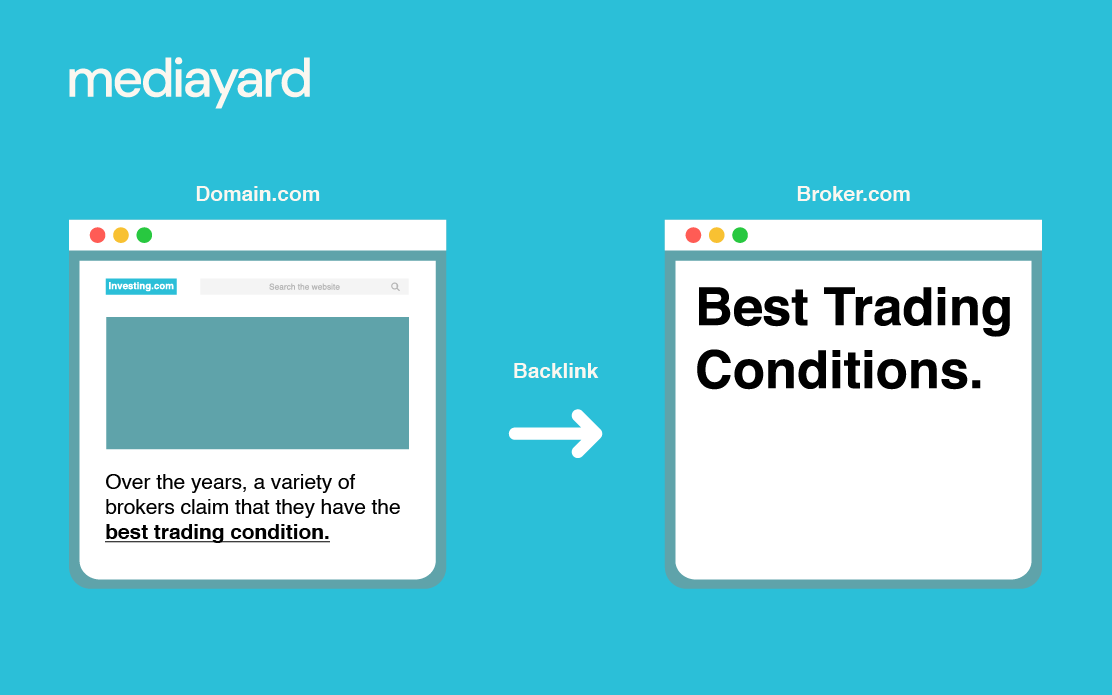
Regardless of the approach you select—multi-domain or a single domain using hreflang—the next operational step remains the same. You need to start building content on your own website while simultaneously acquiring backlinks.
There is often an argument that some websites “simply” rank without having a large amount of content. In isolation, this can appear true. However, to properly evaluate whether backlinks play a role, we need to understand how Google ranks websites.
At a fundamental level, Google’s algorithms aim to serve the most relevant result for a given search query. Relevance comes first. If a user searches for “buy airline tickets to Malaysia,” the top organic results will almost certainly be platforms that sell tickets, regardless of whether they maintain extensive blog content.
The real question is what happens when multiple websites satisfy the same intent.
If two platforms both sell airline tickets to Malaysia, both are technically relevant. Both meet the core requirement of the query. At that point, Google needs additional signals to determine which one should rank higher.
This is where differentiation begins.
Content quality, user experience, technical performance, and domain authority all come into play. But among these factors, backlinks remain one of the strongest external signals Google uses to evaluate credibility and trust.
In simple terms, when relevance is equal, authority becomes the deciding factor.
And authority, in most cases, is built through backlinks.
There is often an argument that some websites “simply” rank without having a large amount of content. In isolation, this can appear true. However, to properly evaluate whether backlinks play a role, we need to understand how Google ranks websites.
At a fundamental level, Google’s algorithms aim to serve the most relevant result for a given search query. Relevance comes first. If a user searches for “buy airline tickets to Malaysia,” the top organic results will almost certainly be platforms that sell tickets, regardless of whether they maintain extensive blog content.
The real question is what happens when multiple websites satisfy the same intent.
If two platforms both sell airline tickets to Malaysia, both are technically relevant. Both meet the core requirement of the query. At that point, Google needs additional signals to determine which one should rank higher.
This is where differentiation begins.
Content quality, user experience, technical performance, and domain authority all come into play. But among these factors, backlinks remain one of the strongest external signals Google uses to evaluate credibility and trust.
In simple terms, when relevance is equal, authority becomes the deciding factor.
And authority, in most cases, is built through backlinks.
Building a Natural Backlink Profile
Not all backlinks contribute equally to rankings. In competitive sectors such as Forex, the focus should be on relevance, credibility, and placement rather than volume. Links from finance-related websites, reputable publishers, and regionally relevant sources carry significantly more weight than generic or low-quality placements. The goal is to build a natural and trustworthy link profile that reinforces both topical authority and geographic relevance, rather than relying on scale alone.
Having said that, maintaining a backlink profile that looks and feels organic is equally important. While it is common to prioritise websites with higher DR or DA, a natural profile will always include links from a wide range of domains. In practice, this means acquiring backlinks from both high-authority and lower-authority websites, reflecting how links are earned in real-world scenarios rather than artificially constructed.
Having said that, maintaining a backlink profile that looks and feels organic is equally important. While it is common to prioritise websites with higher DR or DA, a natural profile will always include links from a wide range of domains. In practice, this means acquiring backlinks from both high-authority and lower-authority websites, reflecting how links are earned in real-world scenarios rather than artificially constructed.
What Success Looks Like
We often hear the same questions. How do we measure organic results? Can we clearly see return on investment?
The answer is yes. But only if the right tracking and attribution framework is in place.
Before going further, it is important to define what an organic lead actually is.
A user who searches for your brand name on Google, Bing, or any other search engine and lands on your website is typically classified as organic traffic. A user who searches for a non-branded query such as “best broker to trade gold” and finds your website through search results is also clearly organic.
However, not all traffic that comes through a search engine should be treated equally.
A branded search implies prior exposure. The user already knows your name and is, in many cases, simply navigating back to your website through a search engine. This awareness is usually created through other acquisition channels such as PPC, affiliates, social media, or direct media buying.
This creates a critical distinction.
While both branded and non-branded searches are technically classified as organic traffic, they represent fundamentally different sources of demand. Branded search is a reflection of brand awareness that has already been generated elsewhere. Non-branded search, on the other hand, represents true organic discovery.
There are different schools of thought on this. Some classify all search traffic as organic by default. However, from a performance and attribution perspective, treating branded traffic as an SEO outcome can be misleading.
A more accurate approach is to separate the two.
If the objective is to measure the effectiveness of SEO as a growth channel, then non-branded traffic should be the primary focus. Branded searches indicate demand that already exists. Non-branded searches indicate demand that SEO is actively capturing.
From a technical point of view, building such a system is relatively achievable, but it requires more than standard analytics setup. The objective is not simply to detect whether a session came from a search engine, but to determine whether the user should genuinely be attributed to SEO.
In practice, this means combining landing page data, search query intelligence, and prior touchpoint history. A robust setup should be able to identify whether the user entered through the homepage or an internal page, whether that page ranks primarily for branded or non-branded terms, and whether the same browser or user had previously interacted with paid channels such as PPC, affiliates, display, or direct media buys.
If a user lands on an internal page through a query-driven session, and no prior paid interaction exists at cookie, click ID, or stored attribution level, that visit can be classified as a true organic acquisition.
The purpose of the system is therefore not just traffic reporting, but attribution filtering.
The answer is yes. But only if the right tracking and attribution framework is in place.
Before going further, it is important to define what an organic lead actually is.
A user who searches for your brand name on Google, Bing, or any other search engine and lands on your website is typically classified as organic traffic. A user who searches for a non-branded query such as “best broker to trade gold” and finds your website through search results is also clearly organic.
However, not all traffic that comes through a search engine should be treated equally.
A branded search implies prior exposure. The user already knows your name and is, in many cases, simply navigating back to your website through a search engine. This awareness is usually created through other acquisition channels such as PPC, affiliates, social media, or direct media buying.
This creates a critical distinction.
While both branded and non-branded searches are technically classified as organic traffic, they represent fundamentally different sources of demand. Branded search is a reflection of brand awareness that has already been generated elsewhere. Non-branded search, on the other hand, represents true organic discovery.
There are different schools of thought on this. Some classify all search traffic as organic by default. However, from a performance and attribution perspective, treating branded traffic as an SEO outcome can be misleading.
A more accurate approach is to separate the two.
If the objective is to measure the effectiveness of SEO as a growth channel, then non-branded traffic should be the primary focus. Branded searches indicate demand that already exists. Non-branded searches indicate demand that SEO is actively capturing.
From a technical point of view, building such a system is relatively achievable, but it requires more than standard analytics setup. The objective is not simply to detect whether a session came from a search engine, but to determine whether the user should genuinely be attributed to SEO.
In practice, this means combining landing page data, search query intelligence, and prior touchpoint history. A robust setup should be able to identify whether the user entered through the homepage or an internal page, whether that page ranks primarily for branded or non-branded terms, and whether the same browser or user had previously interacted with paid channels such as PPC, affiliates, display, or direct media buys.
If a user lands on an internal page through a query-driven session, and no prior paid interaction exists at cookie, click ID, or stored attribution level, that visit can be classified as a true organic acquisition.
The purpose of the system is therefore not just traffic reporting, but attribution filtering.