Hreflang - The Absolute Guide for Beginners - 2026
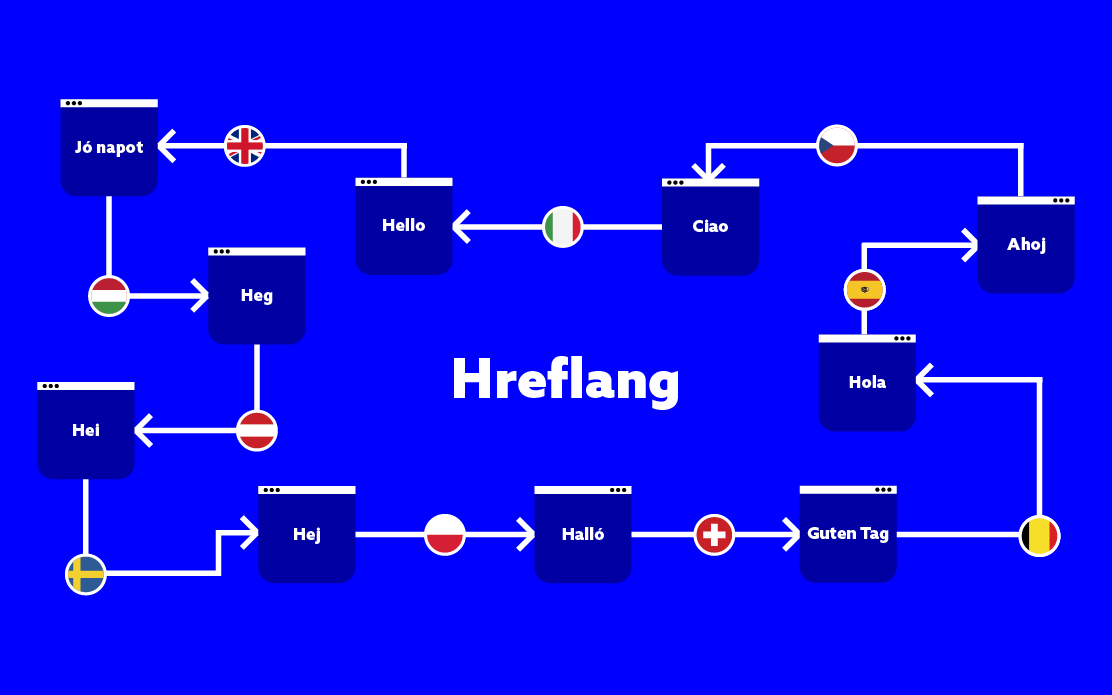
If your website has content in multiple languages and is targeting multiple regions or countries, then you must understand and use the hreflang attribute. In this post, we’ll cover everything from the basic concept to implementation and troubleshooting common issues.
Hreflang is a simple HTML attribute, but it can be challenging to fully understand.
Google’s John Mueller described hreflang as “one of the most complex aspects of SEO” because it gets “really hard quickly.”
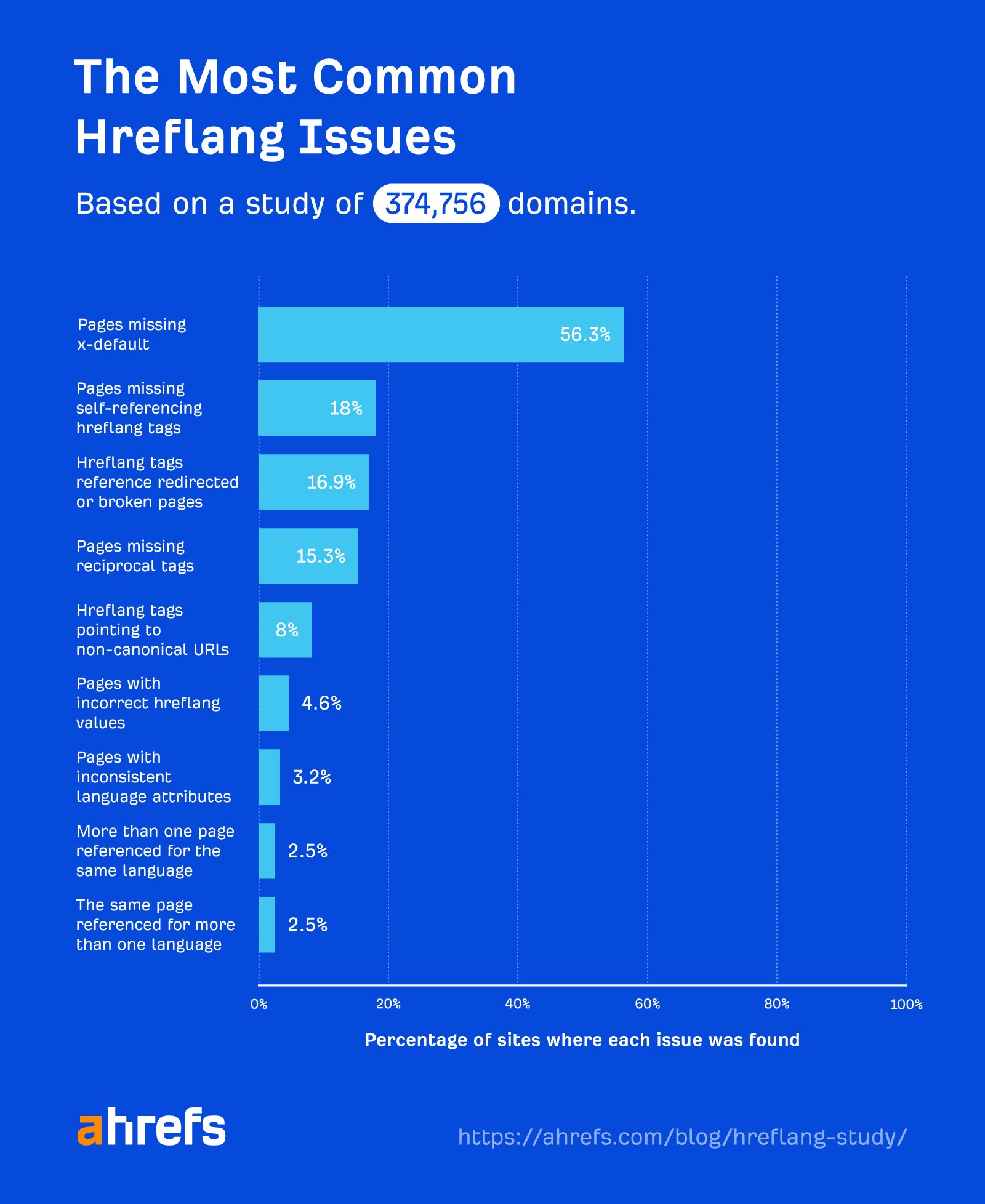
When Ahrefs, a platform that is essential for marketers, ran a study on hreflang across 374,756 domains, it found that 67% of the implementations had issues. Here are the most common ones:
Hreflang is a simple HTML attribute, but it can be challenging to fully understand.
Google’s John Mueller described hreflang as “one of the most complex aspects of SEO” because it gets “really hard quickly.”
When Ahrefs, a platform that is essential for marketers, ran a study on hreflang across 374,756 domains, it found that 67% of the implementations had issues. Here are the most common ones:
But don’t let that put you off. Hreflang isn’t that complicated to understand, and you can automate it to a large extent. (We’ll talk about that later on.) Here’s everything you’ll learn in this guide:
Understanding what the hreflang attribute is
Hreflang is an HTML attribute used to specify the language and geographical targeting of a webpage. It is as simple as that. If you have multiple versions of the same page in different languages, you can use the hreflang tag to tell search engines like Google about these variations. This helps them to serve the correct version to their users.
For example, if we Google “Microsoft” from Germany, this is the first result:
For example, if we Google “Microsoft” from Germany, this is the first result:

If we do the same in Greece, we see this version of the page:

This becomes possible via the correct implementation of Hreflang.
Why hreflang is important for SEO performance
If you and your team have spent numerous hours translating and localising content, then you will want to serve users in Country A the version created specifically for them, and equally the correct version for users in Country B.
If you are optimising for Google (which you should in most cases unless you are targeting markets like China or Russia), then you should use hreflang. Bing states that it does not rely heavily on hreflang and they mostly rely on the content -language HTML attribute, but still references it in its official documentation.
The purpose of this article is not to argue why you should localise and serve content based on a user’s country and language. That should already be clear. However, providing content in a user’s native language improves their overall experience. This typically results in fewer users returning to search results, higher dwell time, lower bounce rates, and increased time on page, all of which are signals believed to positively influence SEO performance and rankings.
But as Gary Illyes from Google alludes to, hreflang tags can also have a direct impact on rankings, as pages within a hreflang cluster may share ranking signals in certain scenarios. For example, duplicate pages can consolidate signals. Hreflang is one of around 40 canonicalisation signals.
This creates an interesting trade-off. Having similar or duplicate content across versions may strengthen a page through signal consolidation, but it also increases the risk of the wrong version appearing in the SERPs. This is why I generally advocate for a single page per language, combined with dynamic personalisation based on the user’s country.
Let’s take a forex broker targeting users in Kenya and South Africa.
The broker creates two versions of a key internal page, for example a “Trading Conditions” page:
example.com/en-ke/trading-conditions
example.com/en-za/trading-conditions
Both pages are in English and contain almost identical content. The differences are limited to local elements such as available payment methods, regulatory disclaimers, and currency references.
Because the content is highly similar, search engines may treat these pages as duplicates. With correct hreflang implementation, they are grouped into the same cluster, and signals can be shared between them. This helps search engines better understand which version to serve based on location.
However, hreflang is not a directive but a signal. There is still a risk that the South African version could rank for users in Kenya, or vice versa, particularly if one page accumulates stronger authority signals.
To understand why this happens, it’s important to look at how search engines handle ranking within a hreflang cluster;
The page that performs best will typically determine the ranking position, while search engines attempt to serve the most relevant version to the user in the SERPs. This does not mean that all pages in a hreflang cluster share signals equally, but for queries such as brand terms or keywords used across multiple languages, rankings are often influenced by the strongest version of the page. For example, a search for “Ahrefs” in Japan would likely have the English page as the strongest version determining the ranking position, but during the re-ranking process, search engines may swap and display the Japanese version to the user. Similarly, terms like “link building” are used across multiple languages, meaning the English page may carry the strongest signals, while users searching in Spanish are shown the Spanish version in the SERPs.
Now compare this with a single-page approach:
example.com/en/trading-conditions
Here, the broker uses dynamic personalisation. A user from Kenya sees locally relevant payment methods such as M-Pesa and KES references, while a user from South Africa sees ZAR pricing and region-specific details. The core content remains consistent, but key elements adjust based on location.
This approach might sound ideal because it removes duplication and consolidates all ranking signals into a single URL. However, we know that Google does not favour dynamic content, particularly when it limits crawlable and indexable variations. At the same time, it reduces the strength of geo-targeting signals that separate localised URLs with hreflang would normally provide.
If you are optimising for Google (which you should in most cases unless you are targeting markets like China or Russia), then you should use hreflang. Bing states that it does not rely heavily on hreflang and they mostly rely on the content -language HTML attribute, but still references it in its official documentation.
The purpose of this article is not to argue why you should localise and serve content based on a user’s country and language. That should already be clear. However, providing content in a user’s native language improves their overall experience. This typically results in fewer users returning to search results, higher dwell time, lower bounce rates, and increased time on page, all of which are signals believed to positively influence SEO performance and rankings.
But as Gary Illyes from Google alludes to, hreflang tags can also have a direct impact on rankings, as pages within a hreflang cluster may share ranking signals in certain scenarios. For example, duplicate pages can consolidate signals. Hreflang is one of around 40 canonicalisation signals.
This creates an interesting trade-off. Having similar or duplicate content across versions may strengthen a page through signal consolidation, but it also increases the risk of the wrong version appearing in the SERPs. This is why I generally advocate for a single page per language, combined with dynamic personalisation based on the user’s country.
Let’s take a forex broker targeting users in Kenya and South Africa.
The broker creates two versions of a key internal page, for example a “Trading Conditions” page:
example.com/en-ke/trading-conditions
example.com/en-za/trading-conditions
Both pages are in English and contain almost identical content. The differences are limited to local elements such as available payment methods, regulatory disclaimers, and currency references.
Because the content is highly similar, search engines may treat these pages as duplicates. With correct hreflang implementation, they are grouped into the same cluster, and signals can be shared between them. This helps search engines better understand which version to serve based on location.
However, hreflang is not a directive but a signal. There is still a risk that the South African version could rank for users in Kenya, or vice versa, particularly if one page accumulates stronger authority signals.
To understand why this happens, it’s important to look at how search engines handle ranking within a hreflang cluster;
The page that performs best will typically determine the ranking position, while search engines attempt to serve the most relevant version to the user in the SERPs. This does not mean that all pages in a hreflang cluster share signals equally, but for queries such as brand terms or keywords used across multiple languages, rankings are often influenced by the strongest version of the page. For example, a search for “Ahrefs” in Japan would likely have the English page as the strongest version determining the ranking position, but during the re-ranking process, search engines may swap and display the Japanese version to the user. Similarly, terms like “link building” are used across multiple languages, meaning the English page may carry the strongest signals, while users searching in Spanish are shown the Spanish version in the SERPs.
Now compare this with a single-page approach:
example.com/en/trading-conditions
Here, the broker uses dynamic personalisation. A user from Kenya sees locally relevant payment methods such as M-Pesa and KES references, while a user from South Africa sees ZAR pricing and region-specific details. The core content remains consistent, but key elements adjust based on location.
This approach might sound ideal because it removes duplication and consolidates all ranking signals into a single URL. However, we know that Google does not favour dynamic content, particularly when it limits crawlable and indexable variations. At the same time, it reduces the strength of geo-targeting signals that separate localised URLs with hreflang would normally provide.
What hreflang tags look like in practice
A hreflang tag follows a consistent HTML structure used to define alternative versions of a page:
Each element in this tag serves a specific purpose:
Each element in this tag serves a specific purpose:
<link rel="alternate" hreflang="x-default" href="https://www.agoratopia.com/"/>- rel="alternate" indicates that the referenced URL is an alternative version of the current page
- hreflang="x" specifies the language or language-region combination
- href defines the exact URL of that alternative page
How to create a hreflang correctly
Creating a hreflang tag is straightforward. You simply identify the correct language code and insert it into the tag along with the corresponding URL. Hreflang supports standard two-letter language codes based on the ISO 639-1 format.
Example:
If you wanted to link the English version of a page to its Danish equivalent, the tag would look like this:
<linkrel="alternate"hreflang="da"href="https://www.domain.com/da"/>In this case, you are defining the Danish version by using the language code de and pointing to the relevant URL.
Targeting a specific region (optional)
In addition to language, hreflang also allows you to specify a region or country. This uses a two-letter country code based on the ISO 3166-1 alpha-2 standard.
This is only necessary when you want to target users speaking the same language in different locations.
For example:
English speakers in Cyprus:
<linkrel="alternate"hreflang="en-cy"href="https://www.domain.com/en-cy"/>