3/27/2026
By Chrysanthos Kanari
6 min read
SEO for a Forex Broker
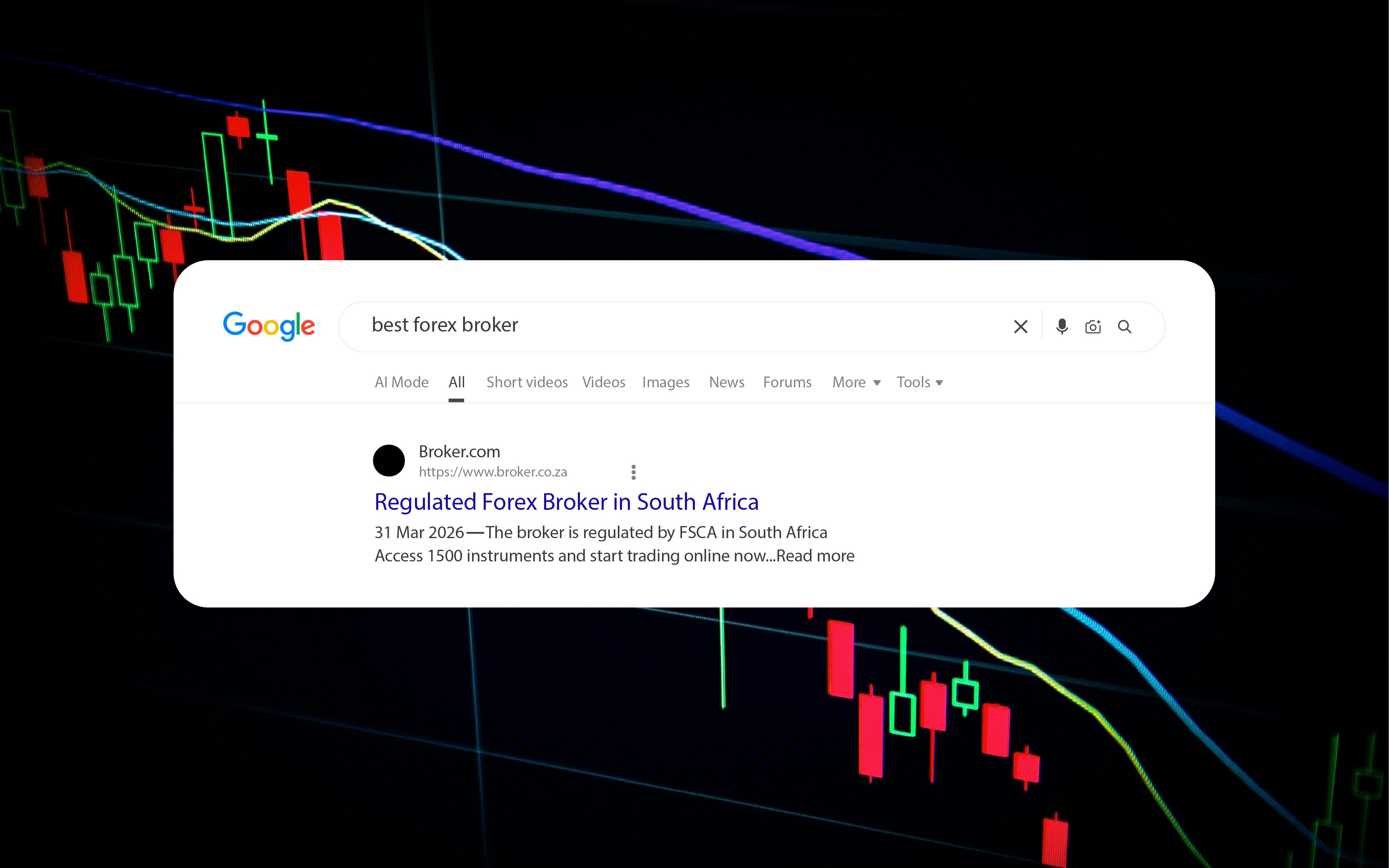
Over the past few years, Forex brokers expanding across multiple jurisdictions have faced an increasingly complex trade-off between regulatory compliance, paid acquisition constraints, and organic visibility.
What used to be a straightforward decision—launching country-specific domains—has evolved into a more nuanced architectural problem.
Today, brokers must decide whether to fragment their presence across multiple TLDs or consolidate authority under a single domain using hreflang, all while navigating licensing restrictions, tracking limitations, and search engine interpretation of geo-targeted content.
Treating domain structure as a purely technical or SEO decision is a common mistake.
In reality, it underpins the entire acquisition model—from how PPC campaigns are segmented to how affiliate traffic is tracked and attributed. Poor architectural decisions at this level often create inefficiencies that compound across every channel.
What used to be a straightforward decision—launching country-specific domains—has evolved into a more nuanced architectural problem.
Today, brokers must decide whether to fragment their presence across multiple TLDs or consolidate authority under a single domain using hreflang, all while navigating licensing restrictions, tracking limitations, and search engine interpretation of geo-targeted content.
Treating domain structure as a purely technical or SEO decision is a common mistake.
In reality, it underpins the entire acquisition model—from how PPC campaigns are segmented to how affiliate traffic is tracked and attributed. Poor architectural decisions at this level often create inefficiencies that compound across every channel.
Multi Domain – Single Domain – Or Both?
Deploying a dedicated domain per country (e.g., broker.co.ke for Kenya) provides strong geo-targeting signals to search engines. ccTLDs are inherently associated with specific markets, which can improve local ranking performance without relying heavily on additional signals such as hreflang annotations. Beyond technical SEO, ccTLDs often enhance user trust and perceived legitimacy.
In regulated industries such as Forex, localised domains can reinforce the impression of compliance with regional licensing frameworks, which may positively influence conversion rates. While a country-specific domain such as .co.za may signal localisation, it does not always translate into higher credibility. In many cases, traders associate global brokers operating on .com domains with greater scale, stability, and international recognition.
Unless the broker has already established strong brand awareness, relying on a local domain alone can have the opposite effect. Without consistent investment in brand building through channels such as PPC, direct media buying, or sponsorships, a country-level domain may appear less authoritative compared to well-known global competitors. From an off-page perspective, ccTLDs also enable the development of country-specific backlink profiles, aligning link acquisition strategies with local publishers, media outlets, and affiliate networks.
This approach strengthens both topical and geographic relevance within each target market. However, these advantages come at the cost of fragmentation—both in authority and operational complexity. A multi-domain setup places greater pressure on the backend infrastructure, which must be capable of supporting multiple country instances efficiently. Without the right system in place, even simple updates can become slow and difficult to manage across domains.
This also creates a stronger need for centralised control. Brokers operating several domains typically require a dashboard or internal workflow that allows teams to make fast, consistent changes across markets without introducing discrepancies in content, compliance messaging, or product information. Organisational complexity is another factor. A broker must decide whether each domain will be handled by a separate regional team or managed centrally. In either case, the model introduces additional coordination overhead, particularly when multiple markets need parallel updates.
The cost of off-page SEO is also significantly higher in a multi-domain environment. Because each domain builds authority separately, backlink acquisition efforts must often be repeated market by market. In contrast, a consolidated hreflang structure allows backlinks acquired for one region to contribute to the overall strength of the primary domain.
In regulated industries such as Forex, localised domains can reinforce the impression of compliance with regional licensing frameworks, which may positively influence conversion rates. While a country-specific domain such as .co.za may signal localisation, it does not always translate into higher credibility. In many cases, traders associate global brokers operating on .com domains with greater scale, stability, and international recognition.
Unless the broker has already established strong brand awareness, relying on a local domain alone can have the opposite effect. Without consistent investment in brand building through channels such as PPC, direct media buying, or sponsorships, a country-level domain may appear less authoritative compared to well-known global competitors. From an off-page perspective, ccTLDs also enable the development of country-specific backlink profiles, aligning link acquisition strategies with local publishers, media outlets, and affiliate networks.
This approach strengthens both topical and geographic relevance within each target market. However, these advantages come at the cost of fragmentation—both in authority and operational complexity. A multi-domain setup places greater pressure on the backend infrastructure, which must be capable of supporting multiple country instances efficiently. Without the right system in place, even simple updates can become slow and difficult to manage across domains.
This also creates a stronger need for centralised control. Brokers operating several domains typically require a dashboard or internal workflow that allows teams to make fast, consistent changes across markets without introducing discrepancies in content, compliance messaging, or product information. Organisational complexity is another factor. A broker must decide whether each domain will be handled by a separate regional team or managed centrally. In either case, the model introduces additional coordination overhead, particularly when multiple markets need parallel updates.
The cost of off-page SEO is also significantly higher in a multi-domain environment. Because each domain builds authority separately, backlink acquisition efforts must often be repeated market by market. In contrast, a consolidated hreflang structure allows backlinks acquired for one region to contribute to the overall strength of the primary domain.
Single Domain for Forex Brokers
A single-domain structure using hreflang takes a fundamentally different approach. Instead of distributing authority across multiple domains, all markets are consolidated under one primary domain, typically structured through subdirectories or parameters, with correct hreflang tags guiding search engines on language and regional targeting.
From an SEO perspective, the most significant advantage is authority consolidation. All backlinks, regardless of the market they originate from, contribute to the strength of a single domain. This allows brokers to build momentum faster in competitive search environments, as link equity is not diluted across multiple assets. This model also simplifies scaling. Entering a new market does not require launching a new domain and rebuilding authority from scratch. Instead, new regions can be added within the existing structure, allowing faster deployment and quicker visibility in search results. Operationally, a single-domain setup reduces fragmentation. Content, tracking, and analytics are centralised, making it easier to maintain consistency across markets. Updates to compliance messaging, platform features, or product offerings can be rolled out more efficiently without the need to replicate changes across multiple domains.
From an acquisition standpoint, this structure also improves visibility across channels. PPC campaigns, affiliate tracking, and attribution models can be managed within a unified environment, reducing complexity in cross-domain tracking and improving data accuracy.
However, this approach introduces its own challenges. Unlike ccTLDs, a single domain does not inherently signal geographic relevance, which means search engines rely more heavily on correct hreflang implementation, content signals, and external factors to correctly interpret targeting. Any misconfiguration in hreflang can lead to indexing issues, incorrect page serving, or internal competition between regional versions.
From an SEO perspective, the most significant advantage is authority consolidation. All backlinks, regardless of the market they originate from, contribute to the strength of a single domain. This allows brokers to build momentum faster in competitive search environments, as link equity is not diluted across multiple assets. This model also simplifies scaling. Entering a new market does not require launching a new domain and rebuilding authority from scratch. Instead, new regions can be added within the existing structure, allowing faster deployment and quicker visibility in search results. Operationally, a single-domain setup reduces fragmentation. Content, tracking, and analytics are centralised, making it easier to maintain consistency across markets. Updates to compliance messaging, platform features, or product offerings can be rolled out more efficiently without the need to replicate changes across multiple domains.
From an acquisition standpoint, this structure also improves visibility across channels. PPC campaigns, affiliate tracking, and attribution models can be managed within a unified environment, reducing complexity in cross-domain tracking and improving data accuracy.
However, this approach introduces its own challenges. Unlike ccTLDs, a single domain does not inherently signal geographic relevance, which means search engines rely more heavily on correct hreflang implementation, content signals, and external factors to correctly interpret targeting. Any misconfiguration in hreflang can lead to indexing issues, incorrect page serving, or internal competition between regional versions.
Content is King? New IS NOT Original
When Apple introduced the iPhone, Steve Jobs described it as “reinventing the phone.” They did not invent something entirely new. They reinterpreted an existing product in a way that aligned with how people actually wanted to use it.
The same principle applies to content. In Forex, very little is truly new. Most topics have already been covered repeatedly over the past two decades. What matters is not whether the idea exists, but how it is presented, structured, and positioned.
Content does not need to be new. It needs to feel original.
That means aligning it with the way your specific audience thinks, searches, and consumes information today. A topic such as “best gold trading conditions” may have been written for years, but the trader engaging with that content today is not the same as the one from five or ten years ago.
The language has changed. The expectations are different. Attention spans are shorter. Trust signals are evaluated differently. Even the way users scan content has shifted from long-form reading to structured, intent-driven consumption.
As a result, the competitive advantage is no longer in discovering new topics, but in adapting existing ones to match current user behaviour and intent within each target market.
The same principle applies to content. In Forex, very little is truly new. Most topics have already been covered repeatedly over the past two decades. What matters is not whether the idea exists, but how it is presented, structured, and positioned.
Content does not need to be new. It needs to feel original.
That means aligning it with the way your specific audience thinks, searches, and consumes information today. A topic such as “best gold trading conditions” may have been written for years, but the trader engaging with that content today is not the same as the one from five or ten years ago.
The language has changed. The expectations are different. Attention spans are shorter. Trust signals are evaluated differently. Even the way users scan content has shifted from long-form reading to structured, intent-driven consumption.
As a result, the competitive advantage is no longer in discovering new topics, but in adapting existing ones to match current user behaviour and intent within each target market.